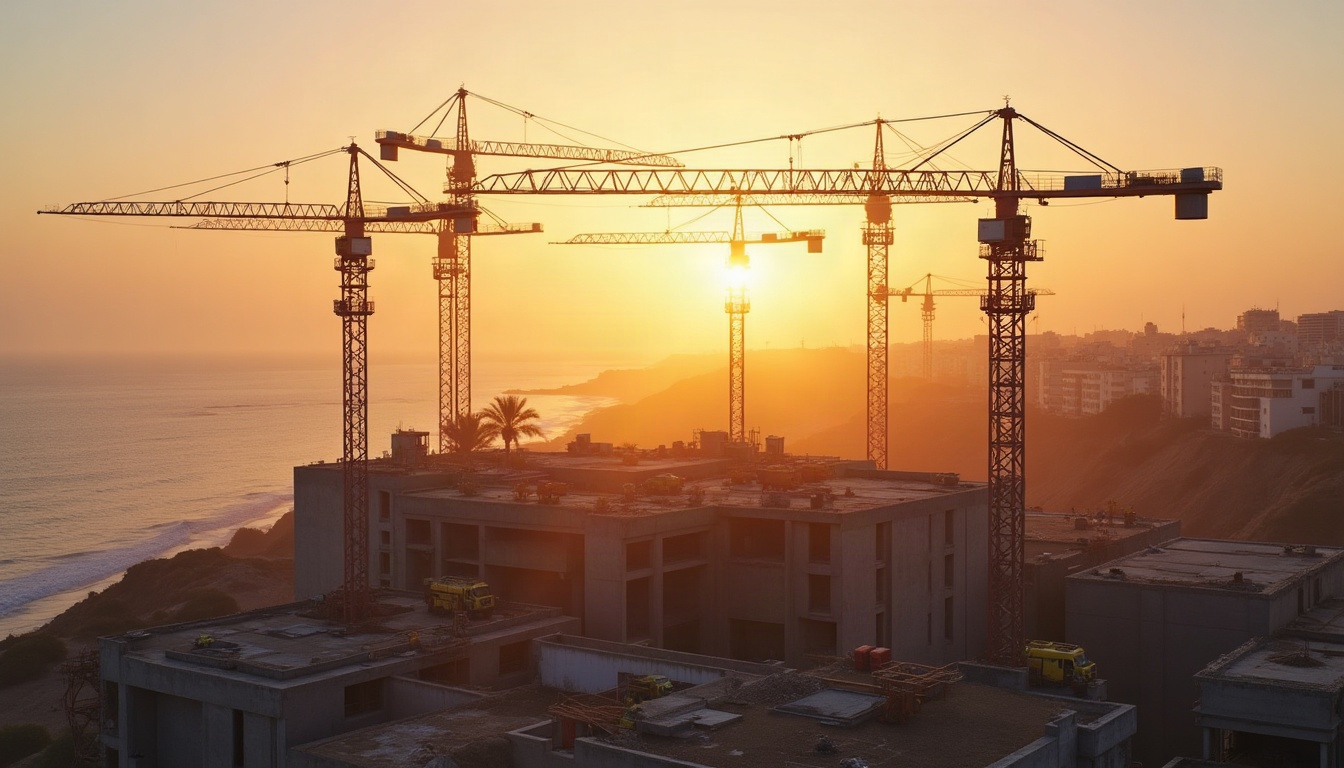
The region’s transformation rests on an unbroken pipeline of flagship projects since the early 2000s — and the 2030 FIFA World Cup is opening the next chapter.
Tanger Med, the regional engine
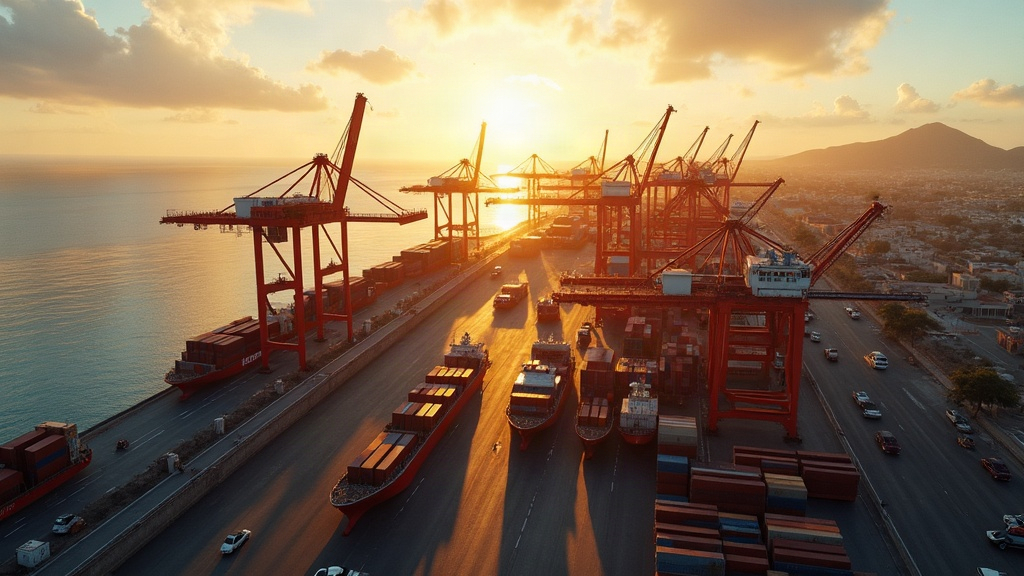
Launched in 2003, operational since 2007 and doubled by Tanger Med 2 in 2019, the port complex handled 11.1 million TEU and 161 million tonnes in 2025. With the TC4 extension on stream and 1,200+ companies in its business zones, it is Africa’s top industrial-port hub. Dedicated page.
Mohammed VI Tangier Tech City
A new 2,000-hectare industrial city at Ain Dalia, developed in Moroccan-Chinese partnership, designed to host hundreds of next-generation plants — e-mobility, electronics, advanced materials — and grow into a full urban pole linked to port and motorway.
High-speed rail
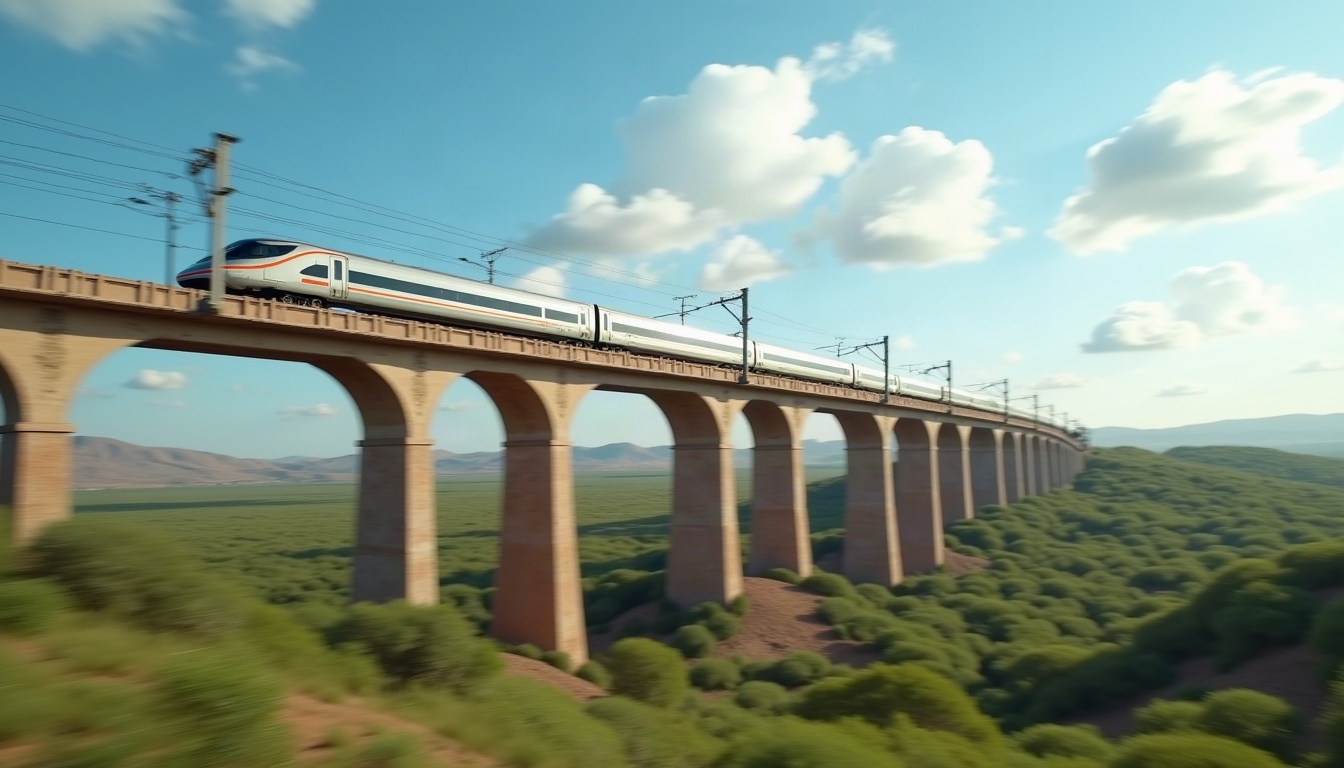
Africa’s first high-speed line, Al Boraq, links Tangier to Rabat in 1h20 and Casablanca in 2h10. The extension under construction towards Marrakech will bring the national high-speed network to 630 km by around 2030.
Tangier Grand Stadium and the 2030 World Cup
Expanded beyond 75,000 seats to FIFA standards, the Grand Stadium makes Tangier a 2030 World Cup host city — with hotels, urban transport and public-space upgrades accelerating across the metropolitan area.
Mediterranean ring road
Over 500 km from Tangier to Saidia, the coastal highway has opened the entire Rif seaboard — Jebha, Al Hoceima — to tourism and blue-economy development.
Energy and water
Strait wind farms, reinforced power interconnections with Spain, dam and water-supply programmes — with green hydrogen on the national horizon — are building the energy backbone of a durable industrial hub.